Customer Experience Management Explained: Meaning, Process, and Business Benefits
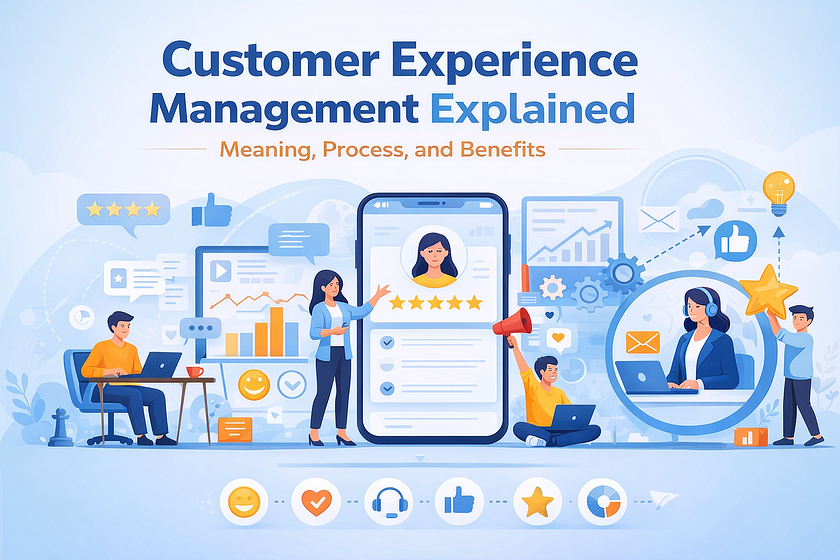
In today’s competitive market, customers do not just buy products — they remember how a brand makes them feel. This is where Customer Experience Management (CEM) becomes important. CEM is all about understanding customer needs, improving every interaction, and building long-term loyalty through better experiences.
Let’s break down what CEM really means, how it works, and why businesses are investing heavily in it.
🌟 What Is Customer Experience Management (CEM)?
Customer Experience Management is the process of designing, tracking, and improving all interactions a customer has with a brand — from the first website visit to post-purchase support.
It covers every touchpoint such as:
- Website and mobile apps
- Sales conversations
- Customer support calls and chats
- Delivery, onboarding, and service follow-ups
The goal is simple: make every interaction smooth, helpful, and consistent.
⚙️ How Does Customer Experience Management Work?
CEM works through a combination of data, technology, and people. Here’s how the process usually flows:
1. Collect Customer Feedback
Businesses gather feedback using surveys, reviews, social media, call recordings, and chat transcripts. This helps understand what customers like and where they face problems.
2. Analyze Customer Behavior
CEM tools use analytics and AI to spot patterns such as frequent complaints, long wait times, or drop-offs in the buying journey.
3. Improve Customer Journeys
Based on insights, companies redesign processes — faster support, simpler checkout, better onboarding, or clearer communication.
4. Train Teams and Automate Support
Employees are trained to handle customers better, while chatbots and automation handle routine questions, giving faster responses.
5. Measure and Optimize Continuously
Metrics like customer satisfaction (CSAT), Net Promoter Score (NPS), and resolution time are tracked to keep improving experiences.
🤝 Why Is Customer Experience Management Important?
Strong CEM delivers real business value:
- Higher customer loyalty — Happy customers return and recommend
- Better brand reputation — Positive experiences lead to better reviews
- Lower support costs — Self-service and automation reduce workload
- Increased sales — Good experiences build trust and repeat purchases
- Competitive advantage — Experience becomes a key differentiator
Today, many customers are willing to pay more for brands that treat them better.
🤖 Role of AI and Automation in Modern CEM
Modern CEM platforms use AI to:
- Predict customer needs
- Route queries to the right agents
- Provide instant answers through chatbots
- Suggest next best actions to agents
This helps companies deliver faster, more personalized support at scale, especially in industries like retail, banking, healthcare, and telecom.
🏢 Who Should Use Customer Experience Management?
CEM is useful for almost every business, including:
- E-commerce brands
- Banks and financial services
- SaaS and tech companies
- Healthcare providers
- Government and public services
Any organization that deals with customers can benefit from managing experiences properly.
✅ Final Thoughts
Customer Experience Management is no longer optional — it is a business necessity. Customers expect quick responses, personalized service, and smooth journeys across all channels. Companies that invest in CEM not only keep their customers happy but also grow faster and stronger in the long run.
In simple terms, great experiences build great brands, and CEM is the system that makes it happen.


Comments
Post a Comment