Customer Service Explained: Core Principles, Common Challenges, and How AI Is Reshaping the Experience
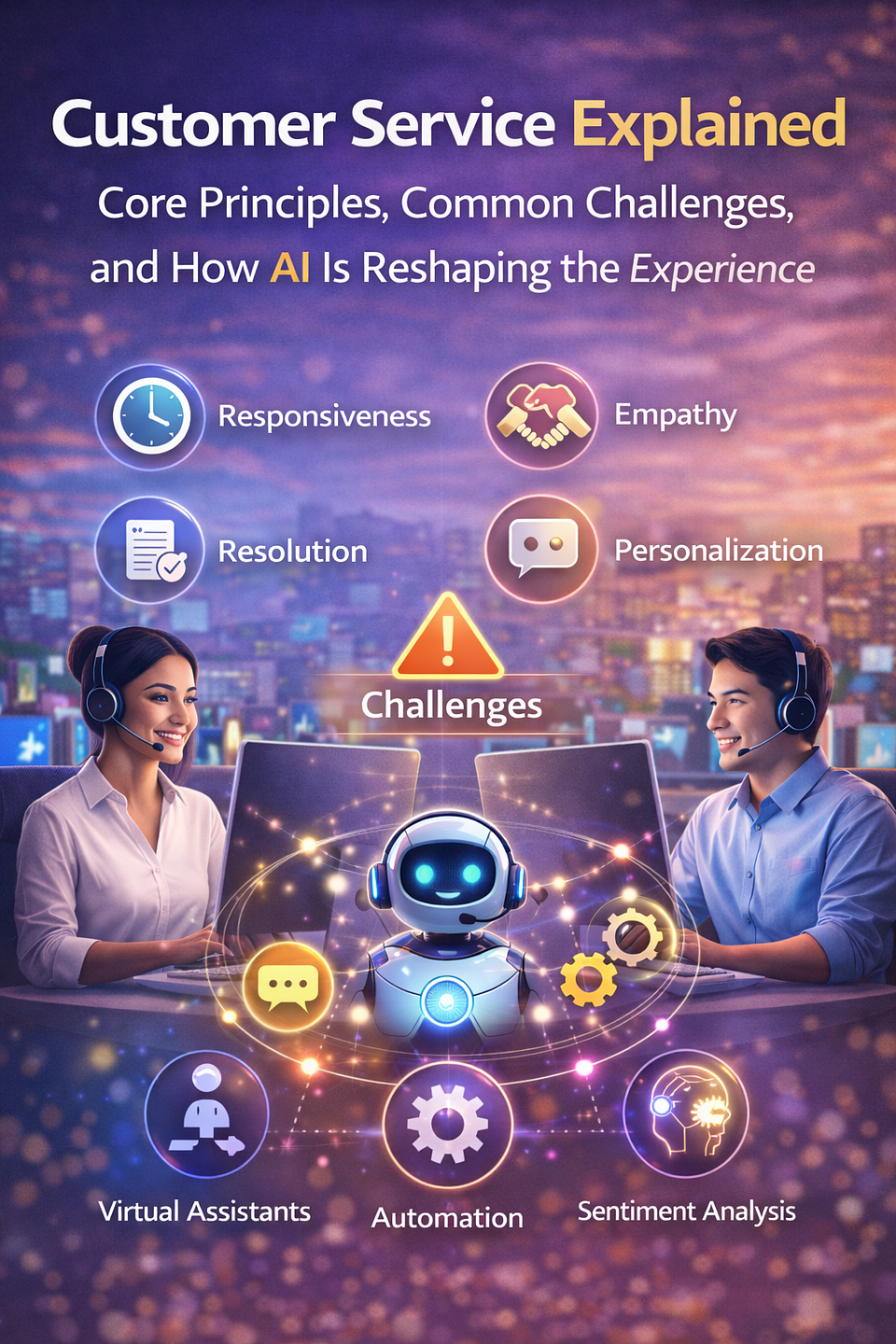
Customers today expect instant answers, seamless conversations, and personalized support. They don’t want to wait in long queues, repeat the same information, or struggle through complicated service processes. As digital channels become the primary way people interact with brands, customer service has evolved far beyond a traditional help desk. It is now a major driver of loyalty, reputation, and long-term business growth.
With AI, automation, and omnichannel platforms becoming mainstream, companies that modernize their service operations are gaining a significant competitive edge. Customers compare every interaction they have — not just within one industry but across all brands they engage with. This rising expectation is forcing organizations to rethink how they deliver service at scale.
What Is Customer Service and Why It Matters
Customer service includes all the support a business provides before, during, and after a purchase. It covers everything from answering product questions and resolving issues to guiding customers and ensuring a positive overall experience.
Strong customer service builds trust, improves retention, and strengthens brand credibility. When customers feel heard and supported, they are more likely to return, recommend the brand, and increase their lifetime value. In many cases, delivering excellent service costs far less than constantly acquiring new customers.
The Core Elements of Outstanding Customer Service
Successful service teams consistently focus on a few essential pillars:
- Speed and availability: Customers expect quick responses on every channel.
- Accuracy: Solving issues correctly the first time builds confidence and loyalty.
- Personalization: Using customer data to tailor interactions improves satisfaction.
- Empathy and professionalism: The tone and attitude of agents strongly influence customer perception.
- Consistency: Customers should receive the same quality of service whether they contact support via phone, chat, or social media.
Together, these elements create dependable and memorable customer experiences.
Common Challenges Customer Service Teams Face
Even mature organizations struggle with operational hurdles such as:
- Managing sudden spikes in customer inquiries
- Long wait times and overloaded agents
- Repetitive manual tasks that slow productivity
- Limited visibility into customer history
- Inconsistent service quality across channels and teams
Without the right tools and processes, these issues can negatively impact both customer satisfaction and agent morale.
Essential Skills for Customer Service Agents
While technology is important, skilled human agents remain critical. Effective agents demonstrate:
- Clear communication to explain solutions simply and confidently
- Active listening to fully understand customer needs
- Problem-solving ability to resolve issues efficiently
- Empathy to build emotional trust
- Technical confidence to navigate systems and digital platforms
Ongoing training and coaching help agents adapt to evolving customer expectations.
Customer Service vs. Customer Support: What’s the Difference?
Customer service focuses on proactive engagement — guiding customers, answering questions, and enhancing satisfaction throughout the customer journey.
Customer support is more reactive and problem-focused, helping users fix specific issues with a product or service.
Both roles work together to deliver a complete customer experience that balances relationship-building with technical problem resolution.
How AI Is Transforming Modern Customer Service
Artificial intelligence is redefining how service teams operate by improving efficiency and personalization:
- Automation handles routine tasks such as FAQs, appointment scheduling, and order updates.
- AI-powered chatbots and virtual assistants enable fast self-service through natural language conversations.
- Agent assist tools provide live recommendations, knowledge articles, and next-best actions.
- Sentiment analysis identifies frustrated customers and prioritizes urgent cases.
By reducing manual workloads and improving decision-making, AI empowers both customers and agents.
Choosing the Right Customer Service Software
Selecting the right technology platform is critical for long-term success. Businesses should evaluate:
- Omnichannel communication capabilities
- Built-in automation and AI features
- Reporting and performance analytics
- Integration with CRM and backend systems
- Scalability, security, and ease of use
A well-chosen platform becomes the foundation for consistent and efficient service delivery.
How Customer Service Shapes the Overall Customer Experience
Service interactions often define how customers perceive a brand. A smooth and helpful experience strengthens loyalty, while a frustrating one can instantly damage trust.
When service teams have access to unified data, automation, and intelligent tools, they can deliver faster resolutions and more meaningful interactions across the entire customer journey.
What Is Omnichannel Customer Service?
Omnichannel service allows customers to communicate through their preferred channel — phone, chat, email, messaging apps, or social media — without losing continuity. Agents see the full conversation history, even if the customer switches channels.
This creates seamless transitions between self-service and human support while minimizing repetition and effort for the customer.
Reducing Service Costs Without Sacrificing Quality
Cost efficiency doesn’t have to come at the expense of customer experience. Smart strategies include:
- Automating repetitive requests
- Encouraging digital self-service
- Improving knowledge management
- Optimizing staffing through forecasting and analytics
AI-driven insights further improve accuracy and reduce rework, lowering overall operating costs.
Key Metrics Every Customer Service Team Should Track
Measuring performance helps teams continuously improve:
- First Response Time (FRT): Speed of initial response
- Resolution Time: How long it takes to solve issues
- Customer Satisfaction (CSAT): Direct feedback from customers
- Net Promoter Score (NPS): Loyalty and advocacy measurement
- Agent Productivity: Quality, handle time, and adherence
These metrics provide visibility into both efficiency and experience quality.
Why Customer Service Remains a Competitive Advantage
In highly competitive markets, customer service often matters more than pricing or product features. Customers remember how they were treated during moments of need. Businesses that combine skilled agents with modern technology create experiences that feel fast, empathetic, and effortless.
Strong service drives loyalty, retention, and long-term growth.
How [24]7.ai Helps Businesses Transform Customer Service
[24]7.ai supports enterprises with AI-driven automation, omnichannel engagement, and advanced agent assistance. Its platform enables:
- Intelligent self-service automation
- Seamless voice and digital engagement
- Real-time agent guidance and sentiment insights
- Enterprise-grade scalability and reliability
With deep expertise in customer experience transformation, [24]7.ai helps organizations build smarter, more efficient, and customer-centric service operations.


Comments
Post a Comment