Customer Acquisition Explained: Meaning, Strategy, and 5 Proven Steps to Win More Customers
Introduction
In today’s competitive market, getting customers is no longer just about having a good product — it’s about how effectively you attract, engage, and convert the right audience. This entire process is known as customer acquisition.
Whether you’re a startup, an e-commerce brand, or a growing enterprise, a strong customer acquisition strategy is essential for sustainable growth. In this blog, we’ll break down what customer acquisition really means, why it matters, and the five practical steps businesses can use to acquire more customers consistently.
What Is Customer Acquisition?
Customer acquisition refers to the process of attracting new customers and converting them into paying users. It includes every touchpoint a potential customer has with your brand — from seeing an ad or social media post to signing up, purchasing, or subscribing.
Customer acquisition isn’t just about numbers; it’s about acquiring the right customers who see value in your offering and stay loyal over time.
Common customer acquisition channels include:
- Digital marketing (SEO, paid ads, social media)
- Content marketing
- Email campaigns
- Referrals and partnerships
- Sales outreach
Why Customer Acquisition Is Important
An effective customer acquisition strategy helps businesses:
- Increase revenue and market share
- Build brand awareness
- Reduce dependency on a single channel
- Create predictable growth
- Improve long-term customer lifetime value
Without a structured acquisition approach, businesses often spend more on marketing while seeing fewer conversions.
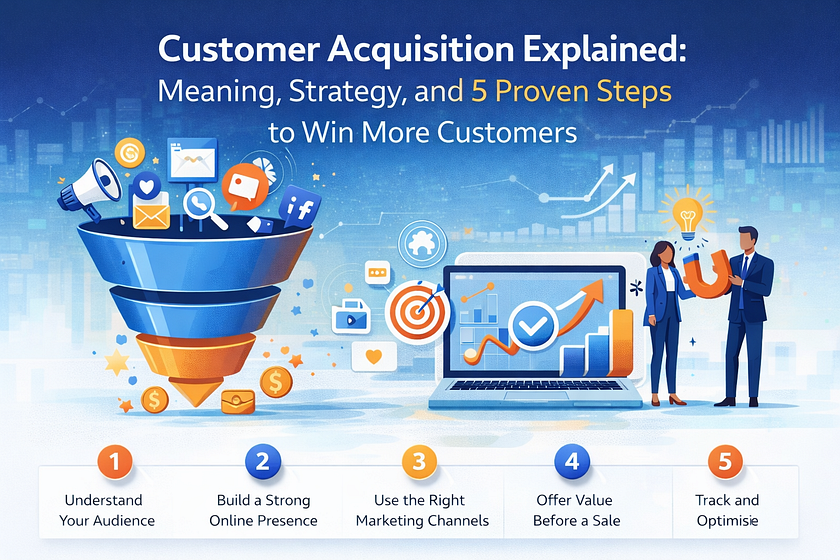
5 Proven Steps to Acquire More Customers
1. Understand Your Target Audience
The foundation of customer acquisition is knowing who your ideal customer is. This includes their needs, pain points, buying behavior, and preferred platforms.
When you understand your audience clearly, your messaging becomes more relevant, and conversion rates improve naturally.
2. Build a Strong Online Presence
Today, most customer journeys begin online. A well-optimised website, active social media profiles, and valuable content help build trust before the first interaction.
- User-friendly website
- Clear value proposition
- Fast loading pages
- Mobile optimisation
A strong digital presence makes it easier for customers to find and choose your brand.
3. Use the Right Marketing Channels
Not every channel works for every business. Some brands grow faster through organic search, while others rely on paid ads or social media.
Test different acquisition channels such as:
- Google Ads & Meta Ads
- SEO and blog content
- Influencer marketing
- Email marketing
Focus more on channels that deliver quality leads, not just traffic.
4. Offer Value Before Asking for a Sale
Customers are more likely to convert when they see value first. This could be through:
- Free trials
- Educational content
- Webinars or demos
- Discounts or limited-time offers
Providing value builds trust and reduces hesitation in the buying decision.
5. Track, Analyse, and Optimise
Customer acquisition doesn’t end once a lead converts. Tracking performance helps you understand what’s working and what needs improvement.
Key metrics to monitor:
- Cost per acquisition (CPA)
- Conversion rate
- Customer lifetime value (CLV)
- Channel-wise performance
Regular optimisation ensures better ROI and scalable growth.
Customer Acquisition vs Customer Retention
While acquiring new customers is important, retaining existing ones is equally critical. A balanced approach ensures sustainable business growth by combining acquisition with long-term relationship building.
Conclusion
Customer acquisition is a continuous, evolving process that requires strategy, experimentation, and optimisation. By understanding your audience, choosing the right channels, delivering value, and tracking results, businesses can consistently attract high-quality customers.
In a digital-first world, companies that invest in smart customer acquisition strategies today are the ones that grow faster and stay ahead tomorrow.


Comments
Post a Comment