From Optional to Essential: Why Conversational AI Has Become the Backbone of Modern Customer Service
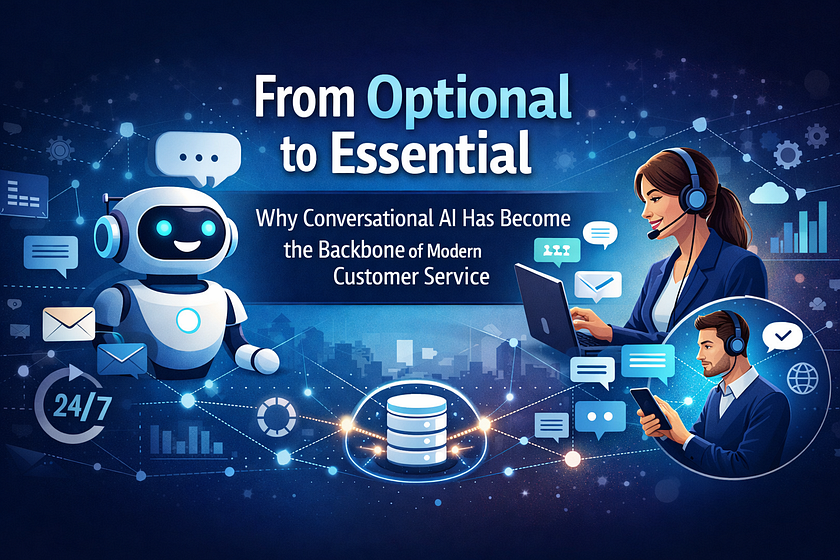
Customer service has undergone a dramatic transformation in the last decade. What was once a reactive support function has evolved into a core business driver that directly impacts brand loyalty, retention, and revenue. Today’s customers expect instant responses, 24/7 availability, and seamless interactions across channels. Meeting these expectations manually is no longer scalable.
That’s why conversational AI is no longer a “nice-to-have” — it’s a strategic imperative.
The Rise of the Always-On Customer
Modern consumers live in a digital-first world. Whether they are shopping online at midnight or seeking technical support during a commute, they expect immediate assistance. Waiting in call queues or sending emails that take days to answer simply doesn’t align with today’s pace of life.
Conversational AI enables businesses to provide real-time responses through chatbots, virtual assistants, and voice systems. These tools can handle thousands of interactions simultaneously, ensuring no customer feels ignored or delayed.
Speed Without Sacrificing Personalization
Speed matters — but personalization matters more. Customers don’t just want quick replies; they want relevant ones.
Advanced conversational AI systems use natural language processing (NLP) and machine learning to understand customer intent, context, and behavior. By integrating with CRM systems and customer data platforms, AI can provide personalized recommendations, order updates, and troubleshooting steps tailored to each individual.
The result? Faster resolutions and more meaningful interactions.
Scaling Support Without Scaling Costs
Traditional customer service models require hiring, training, and managing large teams to handle growing demand. As businesses expand, so do operational costs.
Conversational AI changes that equation. It can automate repetitive queries — such as order tracking, password resets, appointment bookings, and FAQs — freeing human agents to focus on complex or emotionally sensitive cases.
This hybrid model improves efficiency while keeping costs under control, making it especially valuable for high-growth organizations.
Seamless Omnichannel Experiences
Customers interact with brands across multiple touchpoints: websites, social media, messaging apps, and voice assistants. Fragmented service experiences lead to frustration and churn.
Conversational AI ensures continuity across channels. A conversation that starts on a website chat can seamlessly transition to a messaging app or escalate to a live agent — without forcing the customer to repeat information.
This unified approach strengthens trust and enhances overall satisfaction.
Data-Driven Continuous Improvement
Every AI-powered conversation generates valuable data. Businesses can analyze trends, identify common pain points, and refine their products or services accordingly.
Unlike traditional feedback systems that rely on surveys, conversational AI provides real-time insights into customer behavior and sentiment. This allows companies to adapt quickly and stay ahead of evolving expectations.
Supporting Human Agents, Not Replacing Them
A common misconception is that conversational AI replaces human jobs. In reality, it augments human capabilities.
By handling routine queries, AI reduces agent burnout and allows support teams to focus on high-value interactions that require empathy, negotiation, or creative problem-solving. The partnership between AI and human agents creates a more balanced and effective service ecosystem.
The Competitive Advantage
In competitive markets, customer experience is often the key differentiator. Businesses that fail to adopt intelligent automation risk falling behind competitors who offer faster, smarter, and more consistent service.
Conversational AI is not just about technology — it’s about meeting modern expectations. Companies that embrace it demonstrate responsiveness, innovation, and customer-centricity.
Final Thoughts
Customer expectations will only continue to rise. Instant communication, personalization, and seamless support are no longer premium features — they are standard requirements.
Conversational AI empowers businesses to deliver on these demands at scale. In today’s digital landscape, adopting conversational AI isn’t optional. It’s essential for survival, growth, and long-term customer loyalty.


Comments
Post a Comment