How AI-Driven CX Platforms Are Redefining Modern Customer Experience
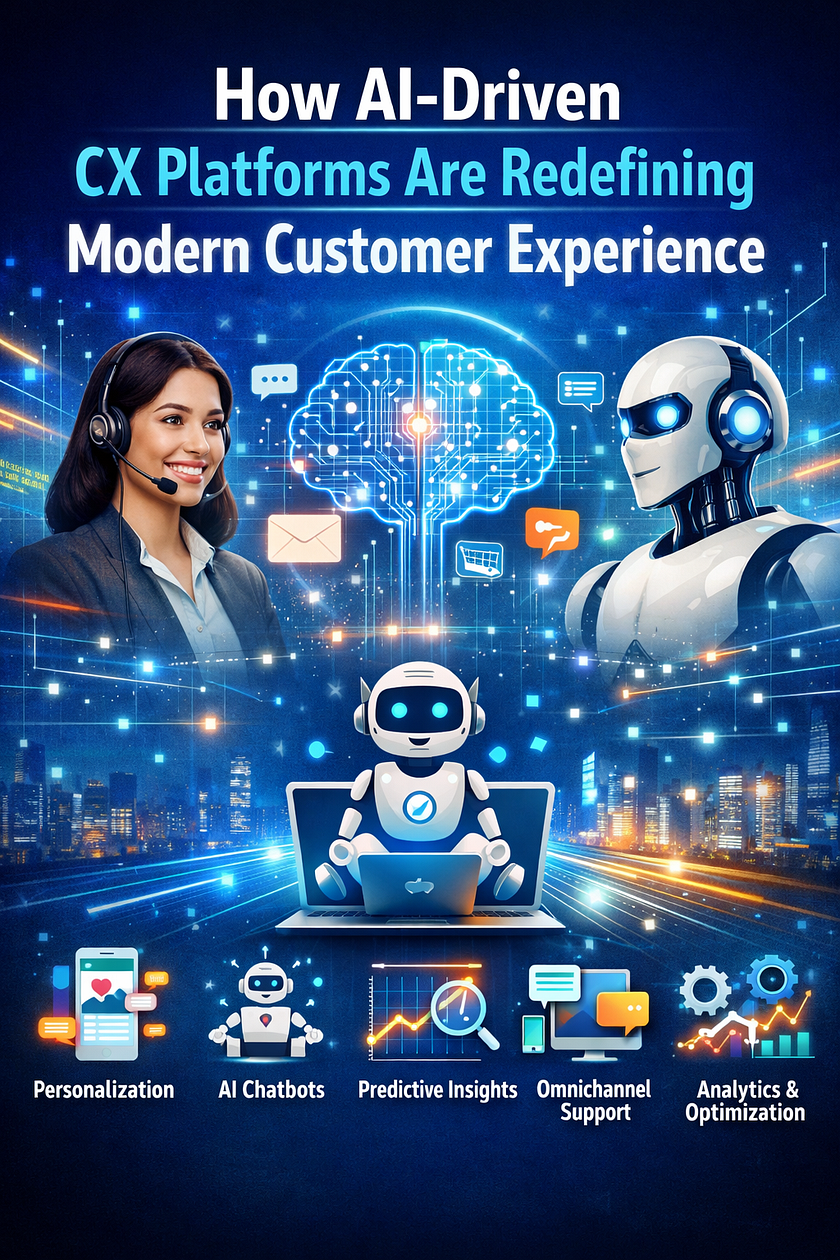
Customer experience (CX) is no longer just about responding to queries — it’s about predicting needs, personalizing journeys, and delivering seamless interactions across every touchpoint. In today’s digital-first world, AI-powered CX management platforms are transforming how businesses engage with customers, creating smarter, faster, and more meaningful experiences.
The Evolution of Customer Experience
Traditionally, customer service relied heavily on manual processes, reactive support models, and siloed communication channels. However, as digital adoption surged, customer expectations evolved. People now expect instant responses, personalized recommendations, and consistent service whether they connect via chat, email, social media, or phone.
This shift has led organizations to adopt AI-driven CX platforms that unify data, automate processes, and enable intelligent decision-making in real time.
What Are AI-Powered CX Management Platforms?
AI-powered CX management platforms combine artificial intelligence, machine learning, automation, and analytics to optimize every stage of the customer journey. These platforms analyze customer data from multiple channels to deliver insights, predict behavior, and automate interactions.
Key Impacts of AI on Customer Experience
1. Hyper-Personalization at Scale
AI analyzes customer behavior, preferences, and past interactions to tailor communication in real time. From personalized product recommendations to customized support responses, businesses can now treat every customer as an individual — even at scale.
2. Faster Response Times
AI chatbots and virtual assistants provide 24/7 support, resolving common queries instantly. Intelligent routing systems ensure that complex issues are directed to the right agents without delays, reducing wait times and improving satisfaction.
3. Predictive Insights
AI doesn’t just respond — it anticipates. Predictive analytics can identify churn risks, suggest proactive outreach, and highlight upselling opportunities. This enables companies to act before issues escalate.
4. Omnichannel Consistency
Modern customers switch between channels effortlessly. AI-powered platforms unify customer data across chat, email, voice, and social media, ensuring a consistent and seamless experience everywhere.
5. Smarter Workforce Optimization
AI tools analyze performance metrics, sentiment, and interaction quality to help managers optimize staffing, training, and resource allocation. This not only improves customer outcomes but also enhances employee productivity.
Real-World Business Benefits
Organizations implementing AI-driven CX platforms often see:
- Increased customer satisfaction (CSAT) scores
- Reduced operational costs through automation
- Higher retention and loyalty rates
- Improved conversion and upselling opportunities
- Enhanced decision-making through real-time analytics
The combination of automation and human intelligence allows businesses to strike the perfect balance between efficiency and empathy.
Challenges to Consider
While AI offers immense potential, successful implementation requires:
- Clean, integrated customer data
- Clear AI governance and ethical policies
- Continuous training and optimization
- A human-centric approach that complements, rather than replaces, agents
Companies that treat AI as a support system rather than a complete replacement for human interaction tend to achieve the best results.
The Future of AI in CX
The next phase of CX innovation will focus on deeper emotional intelligence, real-time sentiment analysis, and predictive journey orchestration. As AI continues to evolve, customer experience will become increasingly proactive, intuitive, and seamless.
Businesses that invest in AI-powered CX management platforms today are not just upgrading technology — they are redefining how relationships are built and sustained in a digital economy.
In a competitive marketplace where experience often matters more than price, AI-driven CX platforms are becoming the ultimate differentiator.


Comments
Post a Comment