What Is Customer Experience (CX) & Why Is It Important?
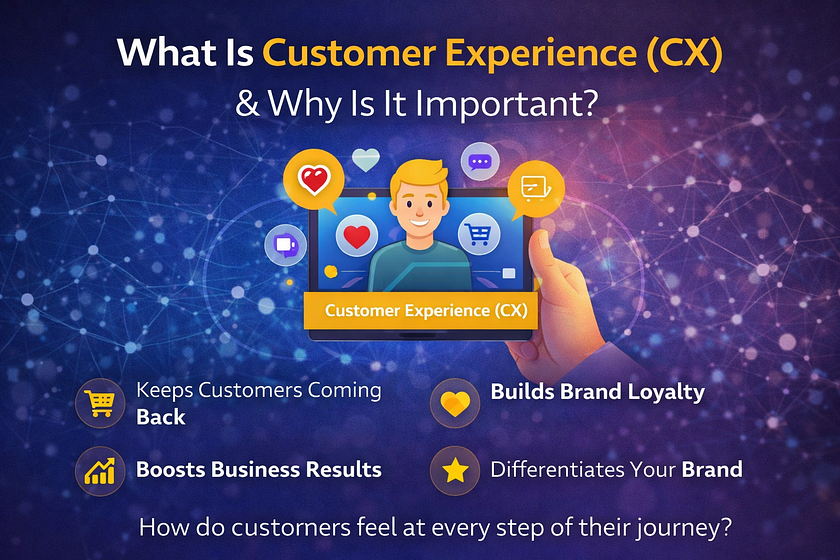
In today’s competitive digital world, products and prices alone no longer decide who wins a customer. What truly sets brands apart is how customers feel at every interaction — from the first website visit to post-purchase support. This overall perception is known as Customer Experience (CX), and it has become one of the strongest drivers of business growth.
Let’s break down what CX really means, why it matters, and how businesses can improve it.
What Is Customer Experience (CX)?
Customer Experience (CX) refers to the entire journey a customer has with a brand across all touchpoints — online and offline. It includes:
- Browsing a website or app
- Talking to customer support
- Receiving a product or service
- Using the product
- After-sales service and follow-ups
CX is not just about one interaction. It’s about the emotions, convenience, and trust customers build over time.
👉 CX is how customers feel about your brand after interacting with you.
Why Customer Experience Is So Important
1. Customers Have More Choices Than Ever
With countless alternatives just a click away, a poor experience can push customers straight to a competitor. A smooth, friendly, and personalized experience keeps them coming back.
2. Good CX Builds Brand Loyalty
When customers feel valued and understood, they’re more likely to:
- Make repeat purchases
- Recommend your brand to others
- Forgive occasional mistakes
Loyal customers don’t just buy more — they become brand advocates.
3. CX Directly Impacts Revenue
Studies consistently show that businesses delivering great customer experiences see:
- Higher conversion rates
- Increased customer lifetime value
- Better retention rates
Simply put, better CX = better business results.
4. CX Differentiates Your Brand
In markets where products and prices look similar, experience becomes the real differentiator. Brands that focus on CX stand out — even in crowded industries.
Key Elements of a Great Customer Experience
🔹 Personalization
Customers expect brands to understand their preferences and history. Personalized recommendations, messages, and offers go a long way.
🔹 Consistency Across Channels
Whether it’s email, social media, chat, or phone support, the experience should feel seamless and connected.
🔹 Speed & Convenience
Fast responses, easy navigation, and quick issue resolution are no longer “nice to have” — they’re expected.
🔹 Empathy & Human Touch
Even with automation and AI, customers still value empathy. Listening and responding with care builds trust.
How Technology Is Shaping CX Today
Modern CX is powered by tools like:
- AI chatbots and virtual assistants
- Customer Experience Management (CXM) platforms
- Omnichannel contact centers
- Analytics and customer feedback tools
These technologies help businesses understand customer behavior, predict needs, and deliver faster, more personalized experiences.
CX vs Customer Service: What’s the Difference?
While customer service is a part of CX, it’s not the whole picture.
- Customer Service = Help when something goes wrong
- Customer Experience = Every interaction, before and after the sale
Great CX ensures customers rarely even need support.
Final Thoughts
Customer Experience is no longer optional — it’s a business necessity. Brands that prioritize CX don’t just meet customer expectations; they exceed them. In return, they gain loyalty, trust, and long-term growth.


Comments
Post a Comment