Fraud Detection Explained: Definition, Process, and Why It Matters for Businesses
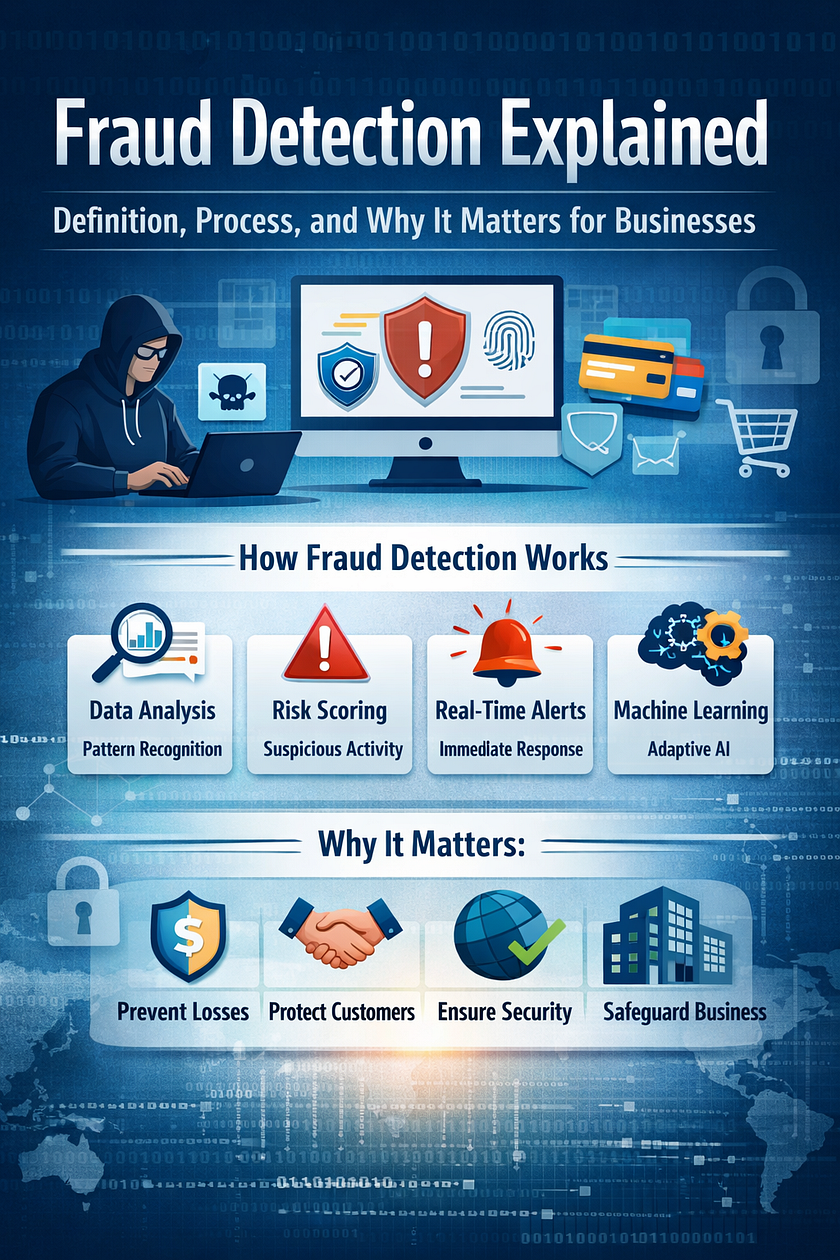
In today’s digital-first world, financial transactions happen in seconds — but so do fraudulent activities. From online banking scams to identity theft and payment fraud, businesses face growing risks every day. That’s where fraud detection plays a crucial role.
Let’s explore what fraud detection is, how it works, and why it has become essential for modern organizations.
What Is Fraud Detection?
Fraud detection is the process of identifying suspicious or illegal activities within transactions, accounts, or systems. It uses technology, data analysis, and behavioral monitoring to detect unusual patterns that may indicate fraud.
Fraud detection systems are commonly used in:
- Banking and financial services
- E-commerce platforms
- Insurance companies
- Telecom services
- Healthcare systems
The goal is simple: prevent financial loss and protect both businesses and customers.
Why Fraud Detection Is Important
Fraud can cause serious consequences, including:
- Financial losses
- Legal penalties
- Damaged brand reputation
- Loss of customer trust
With increasing digital payments and online transactions, fraud attempts have become more sophisticated. Companies can no longer rely on manual monitoring — automated fraud detection systems are now essential.
How Fraud Detection Works
Fraud detection systems operate through a combination of data collection, pattern recognition, and real-time monitoring. Here’s a step-by-step breakdown:
1. Data Collection
The system gathers data from multiple sources such as transaction records, login attempts, device information, IP addresses, and customer behavior history.
2. Pattern Analysis
The system analyzes this data to identify patterns. For example:
- Sudden large transactions
- Multiple failed login attempts
- Transactions from unusual locations
- Irregular purchasing behavior
If a transaction deviates from a customer’s typical pattern, it may be flagged as suspicious.
3. Risk Scoring
Each transaction is assigned a risk score based on predefined rules or AI-driven models. A higher risk score indicates a greater likelihood of fraud.
4. Real-Time Alerts
If a transaction crosses a risk threshold, the system can:
- Block the transaction
- Send alerts to security teams
- Request additional customer verification (OTP, 2FA)
- Temporarily freeze the account
This ensures immediate action before financial damage occurs.
5. Continuous Learning
Modern fraud detection systems use machine learning algorithms. These systems improve over time by learning from past fraud cases and adapting to new fraud techniques.
Types of Fraud Detection Methods
Rule-Based Systems
These systems rely on predefined rules, such as blocking transactions above a certain amount or from high-risk countries.
Advantage: Simple and fast
Limitation: Cannot detect new or complex fraud patterns
Machine Learning Models
AI-powered systems analyze vast amounts of historical data to identify unusual patterns and predict fraud risk.
Advantage: Adaptive and accurate
Limitation: Requires high-quality data
Behavioral Analytics
This method monitors user behavior, such as typing speed, device usage, or transaction habits, to detect anomalies.
Biometric Authentication
Some advanced systems use fingerprint scans, facial recognition, or voice authentication to verify identity and prevent fraud.
Key Industries Using Fraud Detection
Banking & Financial Services
Prevents credit card fraud, money laundering, and unauthorized transactions.
E-Commerce
Detects fake orders, payment fraud, and account takeovers.
Insurance
Identifies fraudulent claims and document manipulation.
Telecom
Prevents SIM swap fraud and subscription scams.
Benefits of Effective Fraud Detection
✔ Reduces financial losses
✔ Improves customer trust
✔ Enhances regulatory compliance
✔ Protects brand reputation
✔ Enables secure digital growth
Businesses that invest in strong fraud detection systems create safer customer experiences and long-term sustainability.
Challenges in Fraud Detection
Despite technological advancements, fraud detection still faces challenges:
- False positives (legitimate transactions flagged as fraud)
- Evolving fraud tactics
- High implementation costs
- Data privacy concerns
To overcome these challenges, companies combine AI, analytics, and human oversight.
The Future of Fraud Detection
The future of fraud detection lies in:
- Advanced AI and predictive analytics
- Real-time transaction monitoring
- Multi-layered security frameworks
- Integration with customer experience platforms
As cybercrime continues to evolve, fraud detection systems must stay ahead with smarter, faster, and more adaptive technology.
Final Thoughts
Fraud detection is no longer optional — it is a critical business necessity. In an era of digital transactions and online services, companies must proactively identify threats before they cause damage.
By combining data analytics, machine learning, and intelligent monitoring systems, businesses can safeguard their operations, protect customers, and build long-term trust.


Comments
Post a Comment