How Generative AI Is Transforming Customer Experience
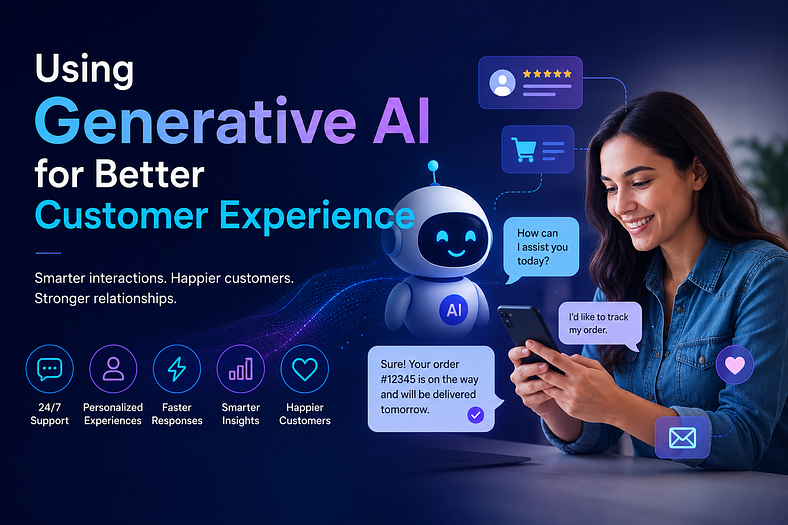
In today’s digital-first world, customer expectations are evolving faster than ever. People want instant responses, personalized recommendations, and seamless support across every platform. Businesses that fail to meet these expectations risk losing customers to competitors who can. This is where Generative AI is making a major impact.
From AI-powered chatbots to personalized product suggestions, Generative AI is helping companies create smarter, faster, and more engaging customer experiences. It is no longer just a futuristic concept — it has become a practical tool that businesses across industries are actively using to improve customer satisfaction and loyalty.
What Is Generative AI?
Generative AI refers to artificial intelligence systems capable of creating human-like content, responses, and interactions. Unlike traditional automation tools that follow fixed rules, Generative AI can understand context, generate natural conversations, and adapt responses based on customer behavior.
Popular AI technologies like virtual assistants, conversational chatbots, automated email systems, and recommendation engines are powered by Generative AI models.
Businesses use these tools to:
- Answer customer questions instantly
- Provide personalized recommendations
- Automate repetitive support tasks
- Improve communication quality
- Enhance customer engagement
Why Customer Experience Matters More Than Ever
Customer experience has become one of the biggest factors influencing brand loyalty. Modern consumers expect quick, convenient, and personalized interactions with businesses.
A poor experience can lead to:
- Negative reviews
- Reduced customer trust
- Lower retention rates
- Lost revenue opportunities
On the other hand, companies that deliver exceptional experiences often see higher customer satisfaction, increased sales, and stronger brand reputation.
Generative AI helps bridge the gap between rising customer expectations and operational efficiency.
How Generative AI Improves Customer Experience
1. 24/7 Customer Support
One of the biggest advantages of Generative AI is around-the-clock customer assistance. AI-powered chatbots can instantly answer common customer queries without requiring human intervention.
Customers no longer need to wait hours for email responses or stay on hold during support calls. AI systems can handle:
- FAQs
- Order tracking
- Product information
- Appointment scheduling
- Refund requests
This leads to faster resolutions and improved customer satisfaction.
2. Personalized Recommendations
Generative AI analyzes customer behavior, purchase history, and preferences to provide tailored recommendations.
For example:
- E-commerce platforms suggest products customers are likely to buy
- Streaming services recommend movies and music based on viewing habits
- Food delivery apps personalize restaurant suggestions
Personalization makes customers feel understood, increasing engagement and conversion rates.
3. Faster Response Times
Customers value speed. Generative AI can process and respond to customer inquiries within seconds, significantly reducing wait times.
Businesses can automate:
- Live chat responses
- Email replies
- Social media interactions
- Technical support tickets
This allows support teams to focus on more complex issues while AI handles routine interactions.
4. Smarter Virtual Assistants
AI-powered virtual assistants are becoming more conversational and intelligent. They can understand natural language, remember context, and provide more accurate responses.
Instead of robotic interactions, customers experience smoother and more human-like conversations.
Industries using AI assistants include:
- Banking
- Healthcare
- Retail
- Travel
- Real estate
5. Better Customer Insights
Generative AI helps businesses analyze customer feedback, reviews, and conversations to identify trends and pain points.
Companies can use these insights to:
- Improve products and services
- Identify customer needs
- Optimize marketing strategies
- Enhance support quality
Data-driven decisions help businesses create more customer-focused experiences.
Real-World Applications of Generative AI
Retail and E-Commerce
Online retailers use AI to recommend products, generate personalized shopping experiences, and automate customer support.
Healthcare
Hospitals and healthcare providers use AI assistants to schedule appointments, answer patient queries, and provide healthcare information.
Banking and Finance
Banks use AI chatbots for transaction support, fraud alerts, and customer account management.
Travel and Hospitality
Travel companies use AI to assist customers with bookings, travel recommendations, and real-time support.
Challenges of Using Generative AI
While Generative AI offers many benefits, businesses should also consider potential challenges.
Data Privacy Concerns
AI systems rely heavily on customer data. Companies must ensure data is collected and stored securely.
Maintaining Human Touch
Although AI can automate many interactions, some situations still require empathy and human understanding.
Accuracy and Bias
AI-generated responses are not always perfect. Businesses need proper monitoring systems to maintain accuracy and fairness.
The Future of Customer Experience With AI
Generative AI is expected to become even more advanced in the coming years. Future AI systems may offer:
- Hyper-personalized experiences
- Emotion-aware interactions
- Voice-based AI assistants
- Predictive customer support
- Fully automated service experiences
As AI technology evolves, businesses that adopt it strategically will gain a competitive advantage in customer engagement and satisfaction.
Final Thoughts
Generative AI is changing the way businesses interact with customers. By delivering faster responses, personalized experiences, and smarter support systems, AI helps companies build stronger customer relationships while improving operational efficiency.
However, the best customer experiences will come from combining AI automation with human creativity and empathy. Businesses that find the right balance between technology and human interaction will be better positioned for long-term success.
As customer expectations continue to rise, Generative AI is no longer optional — it is becoming an essential part of modern customer experience strategies.


Comments
Post a Comment