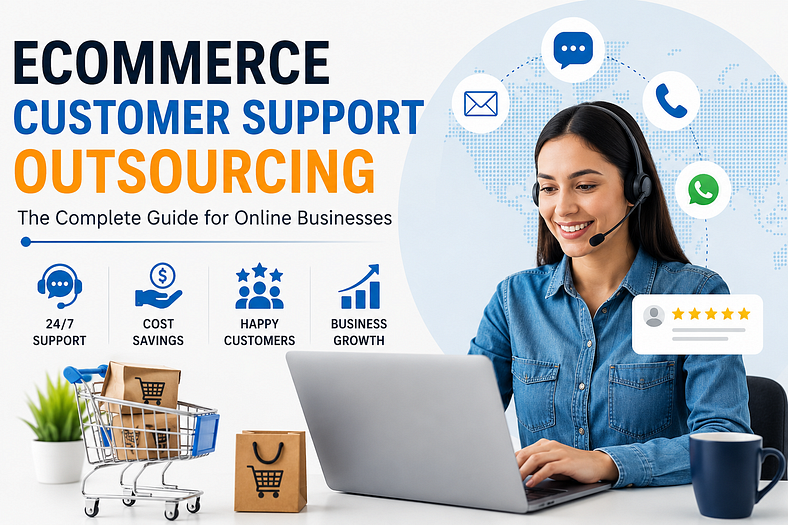
Ecommerce Customer Support Outsourcing: The Complete Guide for Online Businesses
Introduction
Customer experience has become one of the biggest factors influencing success in ecommerce. While competitive pricing and quality products attract shoppers, exceptional customer support is what keeps them coming back. From answering product questions to resolving delivery issues and processing returns, customers expect fast, reliable, and personalized assistance across multiple channels.
However, managing an in-house support team can become expensive and difficult as your business grows. Hiring, training, scheduling, and maintaining a customer service department requires significant time and resources. That’s why many online retailers are turning to ecommerce customer support outsourcing.
Outsourcing customer support allows ecommerce businesses to provide professional, 24/7 assistance while reducing operational costs and improving customer satisfaction. In this guide, we’ll explain everything you need to know about ecommerce customer support outsourcing, including its benefits, challenges, services, and best practices.
What Is Ecommerce Customer Support Outsourcing?
Ecommerce customer support outsourcing is the process of partnering with a third-party service provider to handle customer interactions on behalf of your online store.
These providers manage customer inquiries across multiple communication channels, including:
- Live Chat
- Email Support
- Phone Support
- Social Media Messaging
- WhatsApp Support
- SMS Support
- Marketplace Support (Amazon, Flipkart, Shopify, etc.)
Instead of building a large in-house support team, businesses gain access to trained customer service professionals who represent their brand and deliver high-quality support.
Why Ecommerce Businesses Are Outsourcing Customer Support
Online shopping has changed customer expectations. Consumers now expect instant responses, personalized interactions, and seamless support regardless of the time of day.
As order volumes increase, handling every customer request internally becomes more challenging. Outsourcing helps businesses maintain excellent service while focusing on product development, marketing, and business growth.
Companies outsource customer support to:
- Reduce operational costs
- Offer 24/7 customer service
- Improve response times
- Scale support during seasonal demand
- Access experienced support agents
- Increase customer satisfaction
- Focus internal teams on core business operations
Benefits of Ecommerce Customer Support Outsourcing
1. Lower Operating Costs
Hiring, training, and managing an in-house support team requires substantial investment. Outsourcing eliminates many of these expenses while providing access to experienced professionals.
2. 24/7 Customer Support
Customers shop at all hours. An outsourcing partner ensures assistance is available around the clock, improving customer satisfaction and reducing abandoned purchases.
3. Faster Response Times
Dedicated support teams respond to customer inquiries quickly through live chat, email, phone, and messaging apps, helping resolve issues before they escalate.
4. Easy Business Scalability
Holiday sales, product launches, and promotional campaigns often generate sudden increases in customer inquiries. Outsourcing providers can quickly scale support teams to meet demand.
5. Improved Customer Experience
Experienced support agents handle customer interactions professionally, creating positive experiences that increase trust, loyalty, and repeat purchases.
6. Multilingual Support
Many outsourcing providers offer customer support in multiple languages, helping ecommerce brands expand into international markets.
Services Included in Ecommerce Customer Support Outsourcing
Most outsourcing companies provide a complete range of customer service solutions, including:
- Live Chat Support
- Email Management
- Inbound Customer Calls
- Outbound Follow-ups
- Order Tracking Assistance
- Return & Refund Management
- Product Information Support
- Payment Issue Resolution
- Technical Support
- Social Media Customer Care
- Marketplace Customer Support
- Customer Feedback Collection
Industries That Benefit from Ecommerce Customer Support Outsourcing
Almost every ecommerce sector can benefit from outsourced support, including:
- Fashion & Apparel
- Electronics
- Beauty & Cosmetics
- Grocery & Food Delivery
- Furniture & Home Decor
- Healthcare Products
- Consumer Electronics
- Automotive Accessories
- Pet Supplies
- Online Marketplaces
Challenges to Consider
Although outsourcing offers many advantages, businesses should evaluate potential challenges.
Maintaining Brand Voice
Support agents should understand your products, policies, and communication style to deliver a consistent customer experience.
Data Security
Choose a provider that follows strict security standards and complies with data protection regulations.
Performance Monitoring
Regular reporting, KPIs, and quality assurance help maintain service quality and customer satisfaction.
How to Choose the Right Ecommerce Customer Support Partner
Before selecting an outsourcing company, consider:
- Ecommerce industry experience
- Omnichannel support capabilities
- 24/7 service availability
- AI-powered customer support tools
- CRM integration
- Data security certifications
- Transparent pricing
- Scalability
- Customer reviews
- Performance reporting
A reliable outsourcing partner should function as an extension of your business rather than just another service provider.
Future Trends in Ecommerce Customer Support
Customer service is evolving rapidly with AI and automation. Businesses are increasingly adopting:
- AI-powered chatbots
- Generative AI customer assistants
- Predictive customer support
- Voice AI
- Omnichannel customer engagement
- Self-service knowledge bases
- Sentiment analysis
- Personalized customer experiences
Combining AI with human support enables businesses to resolve routine queries faster while allowing agents to focus on more complex customer needs.
Final Thoughts
Ecommerce customer support outsourcing has become a strategic investment for businesses looking to improve customer experience while controlling operational costs. Whether you’re a startup or a large online retailer, outsourcing provides access to skilled professionals, advanced technology, and scalable support solutions that help your business grow.
By choosing the right outsourcing partner, you can deliver faster responses, increase customer satisfaction, improve retention, and focus on expanding your ecommerce business with confidence.


Comments
Post a Comment