How AI Is Transforming Customer Experience: Benefits, Real-World Use Cases & Success Stories
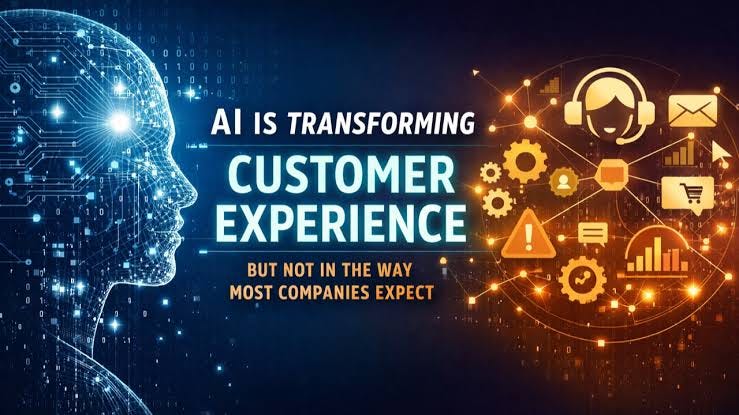
Customer expectations have changed dramatically over the past few years. People now expect businesses to provide instant responses, personalized recommendations, and seamless support across multiple channels. Companies that fail to meet these expectations risk losing customers to competitors.
Artificial Intelligence (AI) has become one of the most powerful technologies helping businesses deliver exceptional customer experiences. From AI chatbots and virtual assistants to predictive analytics and intelligent customer support, AI enables organizations to provide faster, smarter, and more personalized interactions.
In this blog, we’ll explore how AI is transforming customer experience, its biggest benefits, practical use cases, and real-world examples from leading companies.
What Is AI in Customer Experience?
AI in Customer Experience (CX) refers to using artificial intelligence technologies such as:
- Machine Learning
- Natural Language Processing (NLP)
- Generative AI
- Predictive Analytics
- Speech Analytics
- Conversational AI
These technologies help businesses understand customer behavior, automate interactions, personalize communication, and resolve issues faster.
Rather than replacing human agents, AI works alongside them to improve efficiency and deliver better customer satisfaction.
Why AI Matters in Customer Experience
Modern customers expect businesses to:
- Get instant answers
- Provide 24/7 support
- Remember previous interactions
- Offer personalized recommendations
- Resolve issues quickly
- Communicate through their preferred channels
Meeting these expectations manually is difficult, especially for growing businesses. AI helps organizations scale customer support while maintaining high-quality service.
Top Benefits of AI in Customer Experience
1. Faster Customer Support
AI chatbots can answer frequently asked questions instantly without making customers wait.
Benefits include:
- Reduced response times
- Faster issue resolution
- Lower support costs
- Improved customer satisfaction
2. 24/7 Customer Availability
Unlike human agents, AI never sleeps.
Customers can receive assistance any time of the day, including weekends and holidays.
This is especially valuable for global businesses serving customers across different time zones.
3. Personalized Customer Experiences
AI analyzes customer data such as:
- Purchase history
- Browsing behavior
- Preferences
- Previous conversations
- Support history
Using this information, businesses can recommend products, personalize marketing campaigns, and tailor customer interactions.
Personalization increases customer engagement and boosts conversion rates.
4. Improved Agent Productivity
AI assists support agents by:
- Suggesting responses
- Summarizing conversations
- Recommending knowledge base articles
- Automatically categorizing tickets
- Identifying customer sentiment
This reduces workload and allows agents to focus on complex customer issues.
5. Lower Operational Costs
Customer support is one of the largest operational expenses for many businesses.
AI reduces costs by automating repetitive tasks like:
- Password resets
- Order tracking
- Appointment scheduling
- Billing inquiries
- FAQs
This allows businesses to handle more customer interactions without significantly increasing staffing.
6. Better Customer Insights
AI analyzes thousands of customer conversations to identify:
- Common complaints
- Product issues
- Customer preferences
- Service gaps
- Emerging trends
These insights help businesses make data-driven decisions and continuously improve their customer experience.
Real-World Use Cases of AI in Customer Experience
AI Chatbots
Modern AI chatbots understand natural language and can:
- Answer FAQs
- Guide users through websites
- Process returns
- Schedule appointments
- Recommend products
Unlike traditional rule-based bots, AI-powered chatbots continuously improve through learning.
Intelligent Virtual Assistants
Virtual assistants provide voice and text support for customers.
Examples include:
- Banking assistants
- Healthcare appointment assistants
- Travel booking assistants
- Telecom support assistants
These assistants reduce wait times while improving customer convenience.
AI-Powered Customer Support
AI automatically:
- Routes customer requests
- Detects customer intent
- Prioritizes urgent issues
- Suggests the best agent
- Predicts customer needs
This creates faster and more efficient support experiences.
Sentiment Analysis
AI analyzes customer conversations to detect emotions such as:
- Happiness
- Frustration
- Anger
- Satisfaction
If a customer becomes frustrated, AI can immediately escalate the conversation to a human agent.
Personalized Product Recommendations
Retail and e-commerce companies use AI to recommend products based on customer interests.
Examples include:
- Recently viewed items
- Similar products
- Frequently bought together
- Personalized offers
- Seasonal recommendations
This increases both customer satisfaction and sales.
Voice AI for Contact Centers
AI-powered voice assistants can:
- Verify customer identity
- Answer simple questions
- Route calls intelligently
- Provide self-service options
- Collect customer information before transferring to an agent
This significantly reduces average handling time.
Real Examples of AI Improving Customer Experience
Amazon
Amazon uses AI to:
- Recommend products
- Predict customer preferences
- Optimize deliveries
- Power Alexa voice assistant
- Improve shopping experiences
Its recommendation engine contributes significantly to customer engagement and repeat purchases.
Netflix
Netflix uses AI algorithms to recommend movies and TV shows based on viewing history.
Its personalized recommendations help users discover relevant content while increasing platform engagement.
Spotify
Spotify uses AI to create:
- Personalized playlists
- Discover Weekly
- Daily Mixes
- Music recommendations
This personalization keeps users engaged and improves customer retention.
Starbucks
Starbucks uses AI to personalize rewards, promotions, and product recommendations based on customer purchasing habits.
Customers receive customized offers through the Starbucks mobile app.
Uber
Uber leverages AI for:
- Ride matching
- Estimated arrival times
- Route optimization
- Dynamic pricing
- Fraud detection
These AI-driven features create smoother customer experiences for both riders and drivers.
How Generative AI Is Changing Customer Experience
Generative AI has introduced a new level of intelligence in customer service.
Businesses now use Generative AI to:
- Generate human-like responses
- Draft personalized emails
- Summarize customer conversations
- Create knowledge articles
- Assist customer support agents
- Automate after-call summaries
This helps companies deliver faster, more natural, and context-aware interactions.
The Future of AI in Customer Experience
AI will continue to evolve beyond automation.
Future trends include:
- Hyper-personalized customer journeys
- Emotion-aware AI assistants
- Predictive customer service
- Autonomous AI agents
- Multilingual conversational AI
- AI-powered customer journey analytics
Businesses that adopt these innovations early will be better positioned to build stronger customer relationships and stay ahead of the competition.
Best Practices for Implementing AI in Customer Experience
To maximize the value of AI, businesses should:
- Start with clear customer experience goals.
- Integrate AI with CRM and customer support systems.
- Use AI to support — not replace — human agents.
- Continuously train AI models with high-quality data.
- Monitor customer feedback and refine AI performance.
- Ensure data privacy and maintain transparency in AI interactions.
How 24/7.ai Helps Businesses Deliver Better Customer Experiences
Delivering outstanding customer experiences requires the right combination of AI technology and human expertise. 24/7.ai empowers businesses with advanced AI-driven customer engagement solutions that improve service quality, streamline operations, and increase customer satisfaction.
Key capabilities include:
- AI-powered conversational chatbots
- Intelligent virtual agents
- Omnichannel customer engagement
- Agent Assist solutions
- AI-driven voice support
- Real-time sentiment analysis
- Predictive customer insights
- Workflow automation
- Personalized customer interactions
- Advanced analytics and reporting
By combining automation with human support, 24/7.ai helps organizations reduce response times, improve first-contact resolution, lower operational costs, and deliver seamless experiences across every customer touchpoint.
Conclusion
Artificial Intelligence is no longer a future concept — it is a key driver of modern customer experience. By enabling faster support, personalized interactions, intelligent automation, and data-driven insights, AI helps businesses meet rising customer expectations while improving operational efficiency.
Whether through AI chatbots, virtual assistants, predictive analytics, or Generative AI, organizations that embrace AI can build stronger customer relationships, increase loyalty, and gain a competitive advantage. As AI technologies continue to evolve, businesses that invest in customer-centric AI solutions today will be well-positioned to deliver exceptional experiences tomorrow.
FAQs
1. What is AI in customer experience?
AI in customer experience uses technologies like machine learning, natural language processing, and conversational AI to automate support, personalize interactions, and improve customer satisfaction.
2. What are the benefits of AI for customer experience?
AI provides faster support, 24/7 availability, personalized recommendations, improved agent productivity, lower operational costs, and actionable customer insights.
3. How do AI chatbots improve customer experience?
AI chatbots offer instant responses, answer common questions, assist with transactions, and reduce wait times, leading to quicker issue resolution and higher customer satisfaction.
4. Which industries benefit from AI-powered customer experience?
Retail, banking, healthcare, telecommunications, travel, insurance, e-commerce, and technology companies all use AI to enhance customer engagement and service quality.
5. Can AI replace human customer support agents?
No. AI is most effective when it complements human agents by handling repetitive tasks and providing real-time assistance, allowing agents to focus on complex and high-value customer interactions.


Comments
Post a Comment