Ecommerce Customer Support Outsourcing: Benefits, Best Practices & Complete Guide (2026)
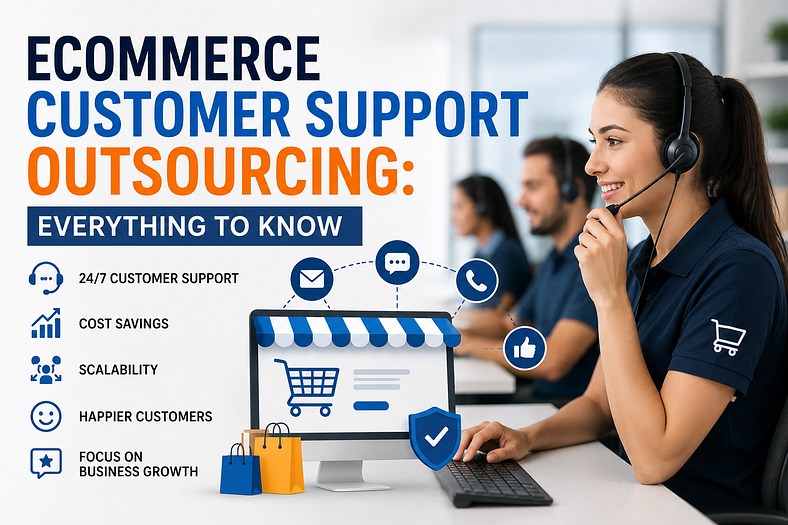
The success of an ecommerce business depends on more than just great products and competitive prices. Today, customers expect quick responses, personalized assistance, and seamless support across multiple channels. Whether they have questions about shipping, returns, payments, or product availability, they want answers instantly.
As ecommerce businesses grow, managing customer support in-house becomes increasingly challenging. This is why many online retailers are turning to ecommerce customer support outsourcing. By partnering with specialized support providers, businesses can deliver high-quality customer service while reducing costs and improving efficiency.
In this guide, we’ll explore everything you need to know about ecommerce customer support outsourcing, including its benefits, services, best practices, challenges, and future trends.
What Is Ecommerce Customer Support Outsourcing?
Ecommerce customer support outsourcing is the process of hiring a third-party customer service provider to manage customer interactions on behalf of an online business.
Instead of building and maintaining a large in-house support team, businesses outsource customer service operations to experienced professionals who handle customer inquiries through multiple communication channels.
Outsourced support teams can assist customers via:
- Live Chat
- Phone Support
- Social Media
- SMS
- Video Support
- Self-Service Portals
These teams act as an extension of your business, ensuring customers receive consistent, professional, and timely assistance.
Why Ecommerce Businesses Outsource Customer Support
Customer expectations continue to rise each year. Online shoppers expect businesses to provide:
- Instant responses
- 24/7 customer support
- Personalized experiences
- Fast issue resolution
- Multiple communication channels
Managing all these expectations internally can become expensive and resource-intensive.
Outsourcing customer support allows ecommerce brands to focus on growing sales while experienced customer service specialists handle customer interactions efficiently.
Key Benefits of Ecommerce Customer Support Outsourcing
1. Lower Operational Costs
Building an in-house customer support department requires significant investment in hiring, training, infrastructure, software, and employee benefits.
Outsourcing reduces these expenses while providing access to experienced support professionals.
Benefits include:
- Lower staffing costs
- Reduced infrastructure investment
- Flexible pricing models
- Lower technology expenses
2. 24/7 Customer Support
Online stores never close.
Customers shop at different times and from different regions.
An outsourced support provider can offer round-the-clock assistance, helping customers regardless of time zones.
This improves customer satisfaction while increasing sales opportunities.
3. Faster Response Times
Customers dislike waiting.
Professional outsourced teams use advanced customer service tools to respond quickly through:
- Live chat
- Phone
- Messaging apps
Faster responses lead to happier customers and higher conversion rates.
4. Improved Customer Experience
Experienced customer support agents understand how to:
- Handle complaints professionally
- Resolve issues efficiently
- Build customer trust
- Deliver personalized experiences
Excellent support encourages repeat purchases and strengthens brand loyalty.
5. Scalability During Peak Seasons
Holiday sales, festive promotions, and product launches often create sudden spikes in customer inquiries.
Outsourced teams can quickly scale operations to handle increased demand without affecting service quality.
This flexibility is especially valuable during events like:
- Black Friday
- Cyber Monday
- Holiday shopping seasons
- Flash sales
- New product launches
6. Access to Skilled Professionals
Outsourcing providers specialize in customer service.
Their agents receive regular training in:
- Communication skills
- Ecommerce platforms
- CRM software
- Conflict resolution
- Sales support
- Product knowledge
Businesses gain immediate access to experienced professionals without lengthy recruitment processes.
7. Focus on Core Business Growth
Managing customer support consumes valuable time.
By outsourcing support operations, ecommerce businesses can concentrate on:
- Marketing
- Product development
- Inventory management
- Supplier relationships
- Business expansion
Common Ecommerce Customer Support Services
Most outsourcing providers offer comprehensive support services.
Live Chat Support
Live chat agents answer customer questions in real time, helping shoppers with product information, order updates, and checkout assistance.
Email Support
Agents manage customer emails related to:
- Returns
- Refunds
- Product questions
- Warranty claims
- Delivery issues
Phone Support
Voice support remains important for complex issues that require personalized assistance.
Social Media Support
Customers increasingly contact brands through platforms like:
- X (Twitter)
Support teams monitor and respond to inquiries while protecting brand reputation.
Order Management
Support agents assist customers with:
- Order confirmation
- Shipping updates
- Order modifications
- Delivery tracking
- Cancellation requests
Returns and Refund Management
Returns are a normal part of ecommerce.
Outsourced teams guide customers through the return process while ensuring policy compliance.
Technical Support
Some ecommerce businesses also outsource technical support for:
- Website issues
- Payment failures
- Login problems
- Mobile app support
AI in Ecommerce Customer Support
Artificial Intelligence is changing how outsourced customer support operates.
Modern providers combine human expertise with AI-powered tools to improve efficiency.
Popular AI applications include:
AI Chatbots
Handle common customer questions instantly.
Examples:
- Order tracking
- Store hours
- Product availability
- Shipping information
Agent Assist
AI helps agents by:
- Suggesting responses
- Retrieving knowledge articles
- Summarizing conversations
- Recommending next actions
Sentiment Analysis
AI detects customer emotions and alerts agents when conversations require special attention.
Predictive Support
AI anticipates customer needs by sending proactive updates on shipping delays, order status, or product recommendations before customers reach out.
Industries That Benefit from Ecommerce Support Outsourcing
Many sectors use outsourced customer support, including:
- Fashion & Apparel
- Electronics
- Beauty & Cosmetics
- Grocery Delivery
- Home Decor
- Furniture
- Healthcare Products
- Sports Equipment
- Pet Supplies
- Automotive Accessories
Best Practices for Ecommerce Customer Support Outsourcing
Choose the Right Outsourcing Partner
Look for a provider with:
- Ecommerce experience
- Strong security standards
- Skilled support agents
- Omnichannel capabilities
- AI-powered tools
- Flexible scaling options
Provide Detailed Product Training
Even experienced agents need in-depth knowledge of your products, policies, and brand voice.
Regular training ensures accurate and consistent customer interactions.
Define Service Level Agreements (SLAs)
Set clear expectations for:
- Response times
- Resolution times
- Customer satisfaction goals
- Escalation procedures
- Reporting frequency
Monitor Performance
Track key performance indicators (KPIs) such as:
- First Response Time (FRT)
- Average Handle Time (AHT)
- First Contact Resolution (FCR)
- Customer Satisfaction (CSAT)
- Net Promoter Score (NPS)
- Customer Effort Score (CES)
Regular reviews help identify opportunities for improvement.
Maintain Consistent Brand Voice
Outsourced agents should communicate in a way that reflects your brand’s tone and values.
Provide style guides, FAQs, and approved messaging to ensure consistency.
Challenges of Ecommerce Customer Support Outsourcing
While outsourcing offers many benefits, businesses should also be aware of potential challenges.
Communication Gaps
Working with external teams requires clear communication and regular collaboration.
Data Security
Customer information must be protected through strong security measures and compliance with relevant regulations.
Quality Control
Businesses should regularly monitor customer interactions and provide feedback to maintain high service standards.
Cultural Differences
If outsourcing internationally, ensure agents understand your target audience’s language, culture, and customer expectations.
Future Trends in Ecommerce Customer Support
The future of ecommerce customer support is being shaped by emerging technologies and evolving customer expectations.
Generative AI
AI-powered assistants are helping agents craft faster, more personalized responses and automate repetitive tasks.
Hyper-Personalization
Support interactions are becoming increasingly tailored using customer history, preferences, and behavior.
Omnichannel Experiences
Customers expect seamless conversations across chat, email, social media, and phone without repeating information.
Voice AI
Advanced voice assistants are improving phone support with natural language understanding and faster issue resolution.
Self-Service Options
AI-powered knowledge bases, FAQs, and virtual assistants empower customers to resolve common issues independently.
How to Choose the Right Ecommerce Customer Support Partner
When evaluating outsourcing providers, consider:
- Experience with ecommerce businesses
- Industry expertise
- Omnichannel support capabilities
- AI and automation tools
- Security and compliance certifications
- Transparent pricing
- Scalability
- Performance reporting
- Customer success stories
- Integration with your ecommerce platform and CRM
A reliable partner should align with your business goals and customer service standards.
Conclusion
Ecommerce customer support outsourcing has become a strategic solution for businesses looking to deliver exceptional customer experiences while controlling costs. By partnering with experienced support providers and leveraging AI-powered technologies, ecommerce brands can offer faster responses, 24/7 availability, and personalized service across every customer touchpoint.
As online shopping continues to evolve, combining skilled support agents with intelligent automation will help businesses improve customer satisfaction, strengthen loyalty, and scale efficiently in an increasingly competitive market.
Frequently Asked Questions (FAQs)
What is ecommerce customer support outsourcing?
It is the practice of hiring a third-party provider to handle customer service functions such as live chat, email, phone, social media support, order management, and returns on behalf of an ecommerce business.
Is outsourcing customer support suitable for small ecommerce businesses?
Yes. Outsourcing allows small and medium-sized businesses to access professional customer service without the high costs of building an in-house team.
How does AI improve outsourced ecommerce customer support?
AI enhances customer support by automating routine inquiries, assisting agents with real-time suggestions, analyzing customer sentiment, and providing proactive updates, leading to faster and more efficient service.
What are the main benefits of outsourcing ecommerce customer support?
The key benefits include reduced operational costs, 24/7 customer support, improved response times, scalability during peak seasons, access to experienced agents, and enhanced customer satisfaction.
What should businesses look for in an outsourcing partner?
Businesses should evaluate industry experience, omnichannel capabilities, AI integration, security standards, scalability, transparent pricing, and a proven track record of delivering excellent customer service.


Comments
Post a Comment